
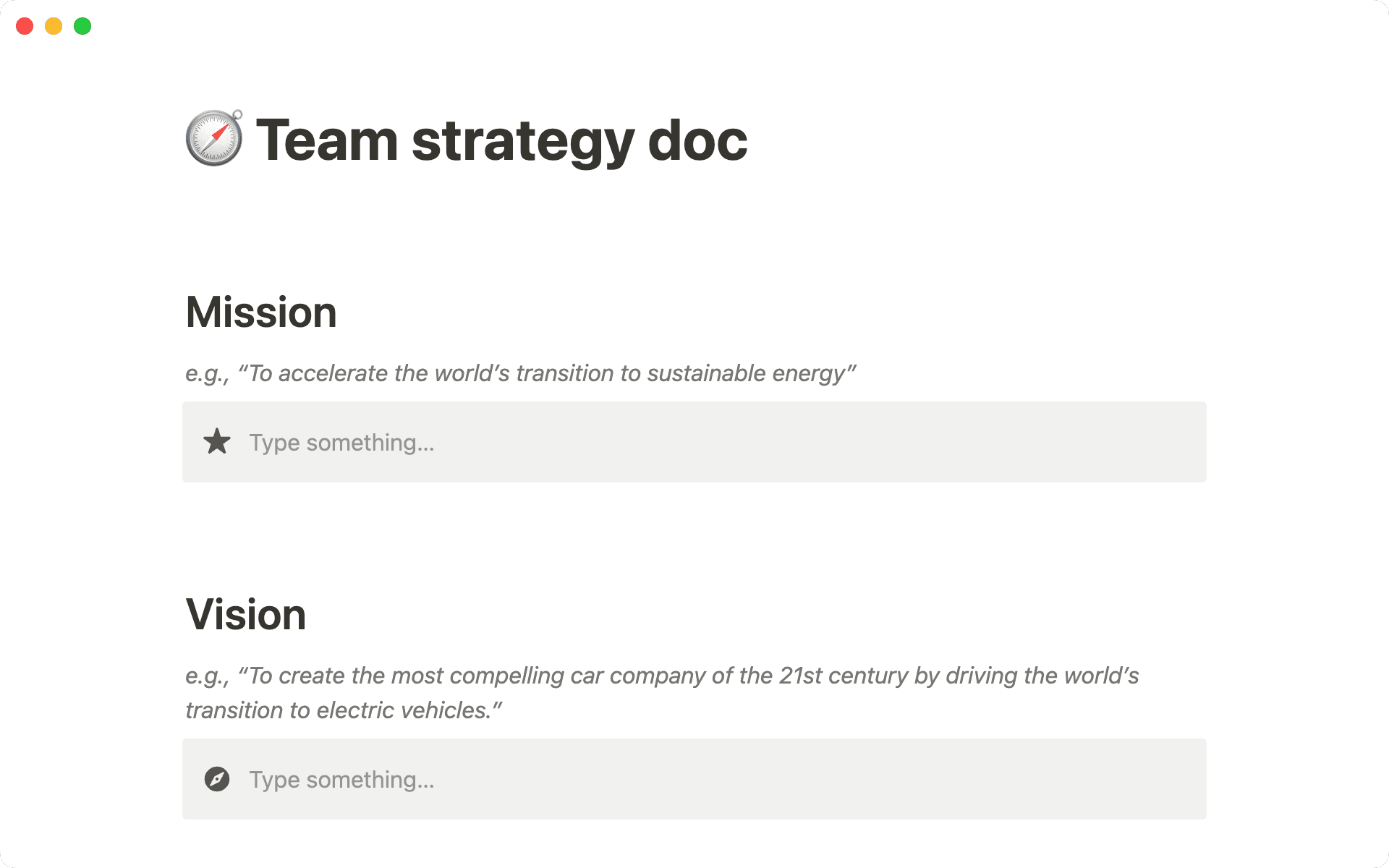
A mission statement describes what you want your business to achieve every day, whereas a vision statement explains your overarching goal.
Business owners at every stage of their careers have dreams — whether launching a successful operation, developing a new product, or expanding into different niches. A vision statement articulates those dreams to show an audience what the future could hold. It’s about setting a long-term goal and staying true to it while communicating a strong value proposition.
What’s a vision statement?
A vision statement is a short sentence that tells your clients or customers what your business goals are. It clarifies your long-term trajectory with a stake in a company’s purpose, helping entrepreneurs ground ideas and inviting investors and collaborators to let their expectations soar.
Keep this statement short and simple. A vision isn’t the place for strategic planning. It should simply set an overall tone for your business practices. Other documents, like a business proposal or project roadmap, can get into the details.
Vision versus mission statement: What’s the difference?
A mission statement describes the current state of your organization and the founding principles behind it. It should include information on what your company does and why. As such, mission statements help investors, employees, and clients understand why you started the business in the first place and what you’re doing to reach those goals short term.
Vision statements focus on how your work serves a long-term goal. It’s about how you see your business contributing to the world, inspiring and motivating the people around you with something to look forward to.
Both vision and mission statements play a key role in the way you set goals and present yourself to your target audience, so it’s essential to have both. Solidifying your long-term vision informs your mission, and vice versa.
What makes a good vision statement?
The vision statement definition itself tells you what it should be: a statement. Not a paragraph or essay.
Dreaming big in a short space is challenging. And no one can predict the future, so doubt and insecurity might enter the mix when you’re trying to conjure your vision. But familiarizing yourself with what makes an excellent vision statement can get you in the mindset of writing one.
A vision statement should be:
Inspiring — aim high and dream big. Team members should feel like they’re working towards a greater goal that informs their everyday work.
Reasonable — be wary of setting goals your organization can’t reach. These objectives frustrate people instead of inspiring them. If you’re creating a mindfulness app, it’s far more attainable to reach a target audience than hope that every American will download your software.
All-encompassing — a vision statement doesn’t describe a project or initiative. It represents an organization’s central focus, like creating a popular and effective mindfulness app. Vision statements shouldn’t include smaller goals like successful marketing campaigns or ROI.
How to write a vision statement
Writing a vision statement is an expansive process. It opens your mind to your potential and fills you with a sense of possibility. Use the following guide to create a statement specific enough to carry meaning and describe a broad vision:
Gather the team — invite key decision-makers and stakeholders to the table when establishing your vision. Everyone should believe in the long-term goal so you can reach it together.
Brainstorm big — your final statement will be brief, but you should brainstorm widely. Get everyone’s ideas on paper, zooming out as far as possible to include the most ambitious (yet still realistic) company goals. Remember to establish a future viewpoint that considers industry innovations and better tech. Hold a meeting, create a vision board, and collect ideas from everyone involved to help the process along.

Write your statement — start with a rough draft and edit it down to size. Vision statements should be no more than a sentence. You can’t expect to find those precise terms on the first go-round, so flesh out the writing before whittling it down.
Share your vision — generate a plan for sharing the statement with employees and external stakeholders. Feel free to post your vision statement on the company home page, social media accounts, or in a central office location as a reminder. Visions change over time, and this is a living declaration, so there’s no need to set it in stone.
Writing the best vision statement possible
When drafting a vision statement, these practices keep your thinking relevant and prevent your team from creating a statement that doesn’t fulfill the right purpose. Here are some more tips:
Avoid jargon — vision statements are universal, with an audience ranging from new employees to long-term clients. Anyone who reads your statement, whether or not they have industry knowledge, should be able to understand it.
Remember that the statement represents the whole — you may have professional goals parallel to a vision statement, but they shouldn’t infiltrate this text. Keep personal and organizational objectives separate.
Be precise — while drafting a vision statement isn’t the same as writing an action plan, this doesn’t mean you shouldn’t be specific. Generic goals won’t excite your target audience, investors, or employees, nor will they provide much guidance.
6 real-life vision statement examples
Who better to demonstrate the merits of a successful business statement than companies fulfilling their vision? Researching different organizations like Patagonia, Warby Parker, and Tesla can give you the insight you need to inform your own process. It's also great practice to research competitors' visions.
Here are some real examples of vision statements to inspire you:
Google: “To provide access to the world’s information in one click.” — brief and to the point, this tech giant’s vision statement ties it clearly to the company’s mission as a search browser and workspace.
Samsung: “Shape the future with innovation and intelligence.” — Samsung’s vision statement is broad, but it thinks as big as the company does, showing the audience Samsung’s true scope. The statement highlights its guiding principles with a nod to how the company’s products — from AI tools to 5G mmWave bands — will impact the future.
Walgreens: “To be the leading partner in reimagining local healthcare and wellbeing for all.” — Walgreens’ specific, customer-centric vision statement paints a clear image of how the company views its potential. It aims for innovation at the local and personal levels, connecting directly with its audience.
IKEA: “To create better everyday life for the many people.” — Swedish furniture company IKEA has taken its vision seriously, reaching a great many people with international stores. The vision also doesn’t mention a word about furniture, instead focusing on how their products could better clients’ lives, making the statement a strong example of a macro goal rather than a micro focus.

Southwest Airlines: “To be the world's most loved, most efficient, and most profitable airline.” — Southwest Airlines’ vision statement pinpoints three core values in a straightforward description. The reader can easily infer that the airline aims to connect with customers, fulfill its purpose of getting travelers to their destinations, and make solid returns.
American Express: “Provide the world’s best customer experience every day.” — this global payments company focuses on the customer rather than finances. It’s a lofty goal with strong core values to back it up, and it hones in on the audience’s experience to show just how much American Express cares.
Solidify your vision with inspiration from Notion
Forging a clear vision is only half the battle. You then have to share it with the world in marketing materials, elevator pitches, and meetings — and that takes more than just a sentence.
Notion knows how difficult it can be to navigate business ownership, and it has a library of templates and articles to help. Use a vision and mission template to guide your statement draft, a brand identity guide to solidify your image, and more thoughts on mission, vision, and core values to better understand your company culture and goals.
