The Digital Double: How Baseten Scaled Its Most-Asked Expert
When Baseten's first account executive hit the limit of what one person could do, the team built him a digital double in Notion—an agent that sounds like him, thinks like him, and answers in his voice 24/7. That single experiment unlocked a wave of Custom Agents across recruiting, marketing, and sales, turning Notion from a place where knowledge lives into a place where expertise actually scales.
When expertise hits a ceiling
When Anthony Katz—known at Baseten simply as Katz—came to Bradford Jordan, the message was simple: He couldn’t do it anymore.
Katz was Baseten’s first account executive. He was close to the founders, with a deep understanding of the product. He even helped build the company’s first ideal customer profile from scratch. Naturally, when new hires started, they’d come to him for … everything. So by the time he found Bradford, 90% of his day was answering questions in Slack—not from customers, but from teammates. He told Bradford he’d tried to join every call, but he’d hit the limit for what one person can do.
Bradford recognized it immediately. It’s his job. As Head of Productivity and Enablement—a role he’s quick to note encompasses humans and agents—he’s responsible for helping people do their best work. Often, that means giving people space to focus on their craft instead of wasting time on what he calls "the work of work"—documenting, aligning, and chasing knowledge and expertise.
But that extra space is often immediately filled with more busywork. “A lot of us have been Katz,” Bradford says. “We have more to give, but there’s just not enough space and we don’t have enough energy.”
The problem wasn’t Katz. It was that his expertise couldn’t scale.
“Can we make a digital double of me?”
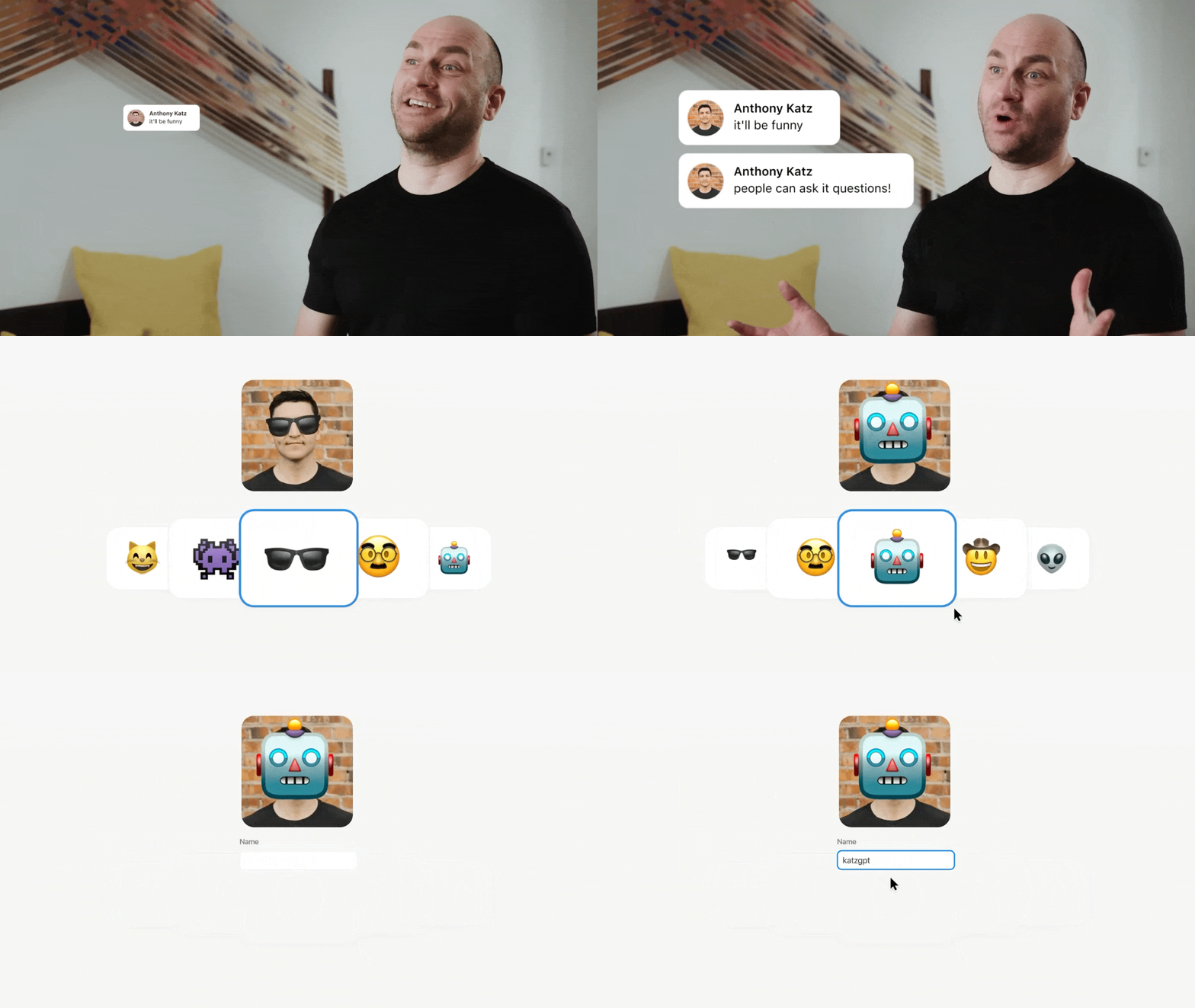
The idea came from Katz himself, in a Slack message, mostly in jest: “Can we make a digital double of me?”
Bradford took it seriously. The team built katzgpt—a Notion Custom Agent designed to sound like Katz, think like Katz, and know what Katz knows. It doesn’t capitalize anything, because Katz never capitalizes anything. It rarely uses commas. And it connects via MCP to Salesforce, Gong, all past Slack conversations, and Notion—Baseten’s system of record where all documentation, decisions, and institutional memory live.
It worked better than anyone imagined. It now lives in a Slack channel called Sales Funnel Friend, where the Sales team brings their questions, and cut the response time on questions from an average of 30 minutes to about 20 seconds. Sometimes the agent answers first, other times a human does. Either way, it becomes a conversation—the agent, a peer, and the person who asked, all talking it through together. “That is a generative, exploratory, curious motion,” Bradford says, “that sometimes results in the one answer and more often results in a number of new questions.”
Dannie Herzberg, Baseten’s president, noticed something else shift. “We normalized asking for help,” she says. “People do it five, ten more times a day now. And it comes back in the voice of Katz, which makes the whole thing feel so natural.”
The best ideas come from the field
From the start, Bradford had one rule about agents: Build from the bottom up. Baseten would never restrict who could create one, because the best ideas often come from people doing the actual work.
The team proved his point. On the recruiting team, Corina built an agent that answers process questions for new hires, pulls competitive intel from cross-functional Slack channels, and sends an automated Friday morning market brief to Slack. Now, the entire recruiting team can focus on the strategy and human connection that comes with the role, not on the busywork that’s part of the job.
Alina, Head of Enterprise Product Marketing, built Pageview Pal—an agent that connects Baseten's marketing calendar with PostHog analytics, delivering pageviews, traffic, and performance data every Monday at 8 a.m. The first thing it surfaced: one of Baseten's top-performing blog posts was years out of date and still pulling significant traffic. Without the agent, that insight never would have made it onto anyone's radar. "We can now prioritize the highest-leverage work," Alina says. "We had no way of knowing a post was getting that kind of traffic—and once we did, we could actually do something about it.”
And then there’s the sales-reporting agent that scans Slack conversations every day, writes knowledge base articles from what it finds, organizes them, and suggests who should own them. That way, when a new question comes in, the answer is already accessible—and no one had to build it from scratch.
The most surprising outcome, Bradford says, wasn’t who adopted Custom Agents. It was that people who didn’t think of themselves as builders found ways to create agents that helped others. They went from doing work to enabling it.
He says Notion AI does three things for Baseten. First, it helps them move faster so they can keep pace with their customers. Second, it keeps them closer to those customers, because the context of every interaction is available the moment they need it. And maybe most importantly, it makes more room for craft from every single person at Baseten.
Uh-oh! It looks like your ad blocker is preventing the video from playing.
Please watch it on YouTube

Building Baseten’s collective brain
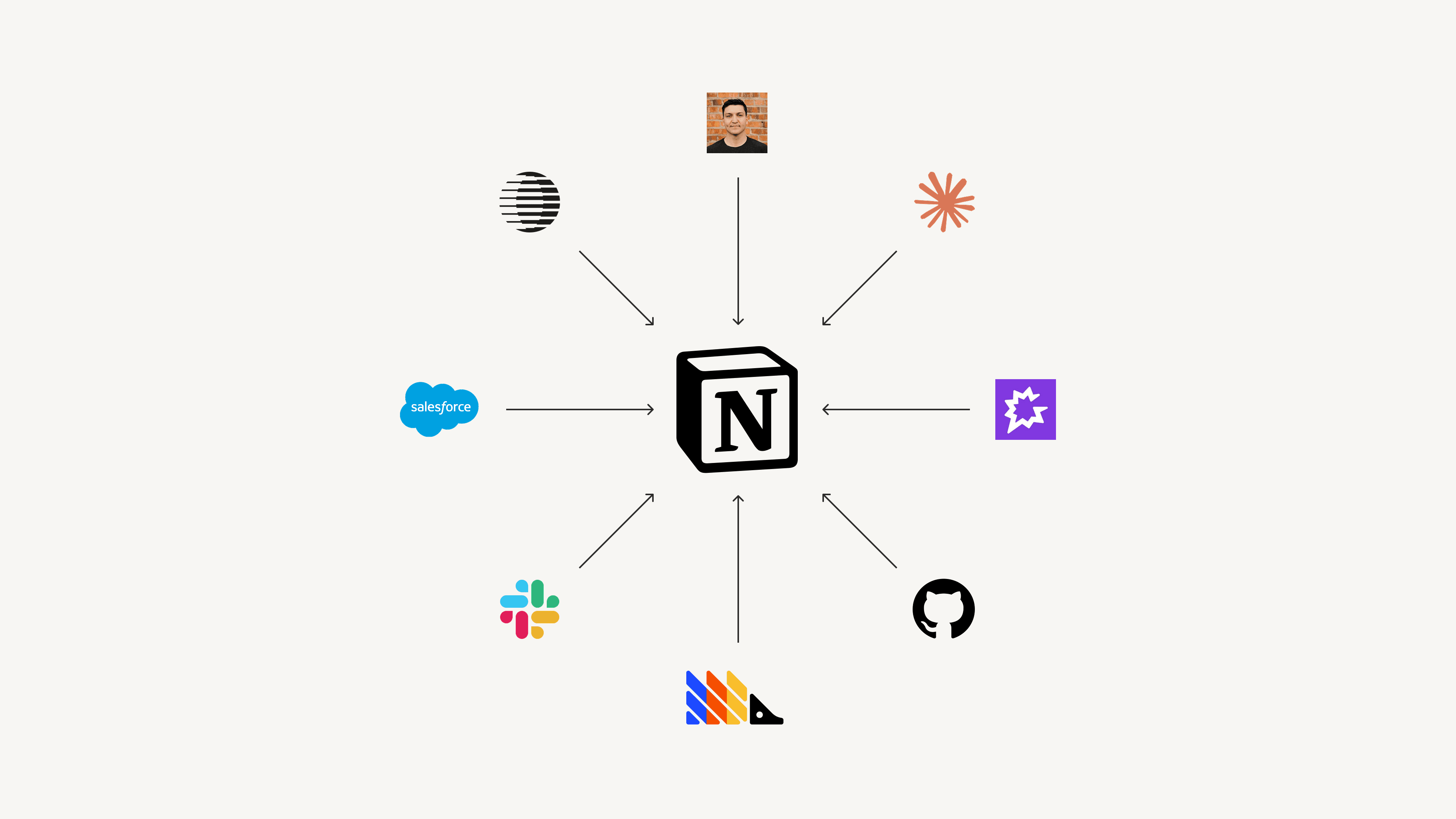
“The truth is, Baseten is fragmented across a handful of disparate sources, like Gong, Salesforce, and Slack,” Dannie says. “But the one singular source of truth where we pull it all together—and what we think of as our collective brain (or system of record)—is Notion.”
Without it, she says, the people who’ve been at Baseten the longest would be spread impossibly thin, holding onto knowledge that no one else can access without pulling them from their work. For Bradford, the things that used to be full-time jobs—governance, documentation, finding critical knowledge that’s needed to get work done—are now handled. What remains is just the work people were hired to do in the first place.
Katz, for his part, has more time these days too.
“I honestly don’t know what Katz even spends his time on anymore,” Dannie says, smiling.
The one singular source of truth where we pull it all together—and what we think of as our collective brain (or system of record)—is Notion.