How Foolproof tore down information siloes — and reclaimed £500,000 a year in saved time
Foolproof, a Zensar company, is a digital product company. Its team introduced Notion as part of a knowledge management transformation, centralizing information, ideas, and content.
Making sense of the information maelstrom
Foolproof, a UK-based global digital design company, more than doubled in size during the pandemic — from 100 to 250 people — while also switching to remote work. Old ways of sharing information, like dropping by a coworker’s desk, fell by the wayside. And information scattered across tools like email, Box, Confluence, and Miro became siloed.
Experience Design Director Philip Morton took the lead in overhauling Foolproof’s knowledge management. After comparing a bunch of options, he landed on Notion and began building a company-wide wiki, centralizing information and tearing down information silos.
If you don’t know where a piece of information lived, you had to ask a colleague for help on Slack.

Move faster with easily accessible information
Until now, information within Foolproof had been scattered across multiple tools and services. Employees couldn’t find processes and Standard Operating Procedures. Sales reps couldn’t surface examples of past work. People didn’t know who knew who to ask when they had a problem.
Notion organized company knowledge into dedicated databases like employees, clients, processes, and past work. Philip conducted an experiment and learned that people took 26 minutes to find nine pieces of information using the old system. With Notion? Just five.
Company veterans like Philip are no longer Foolproof’s de facto knowledge management system; colleagues who used to ask him common questions can now find answers on their own. “If you can save 20 minutes a day, that's one day, per person, per month,” he says. “Across the team, we can reclaim £454,000 in time saved.”
Flexible team homepages adapt to every requirement
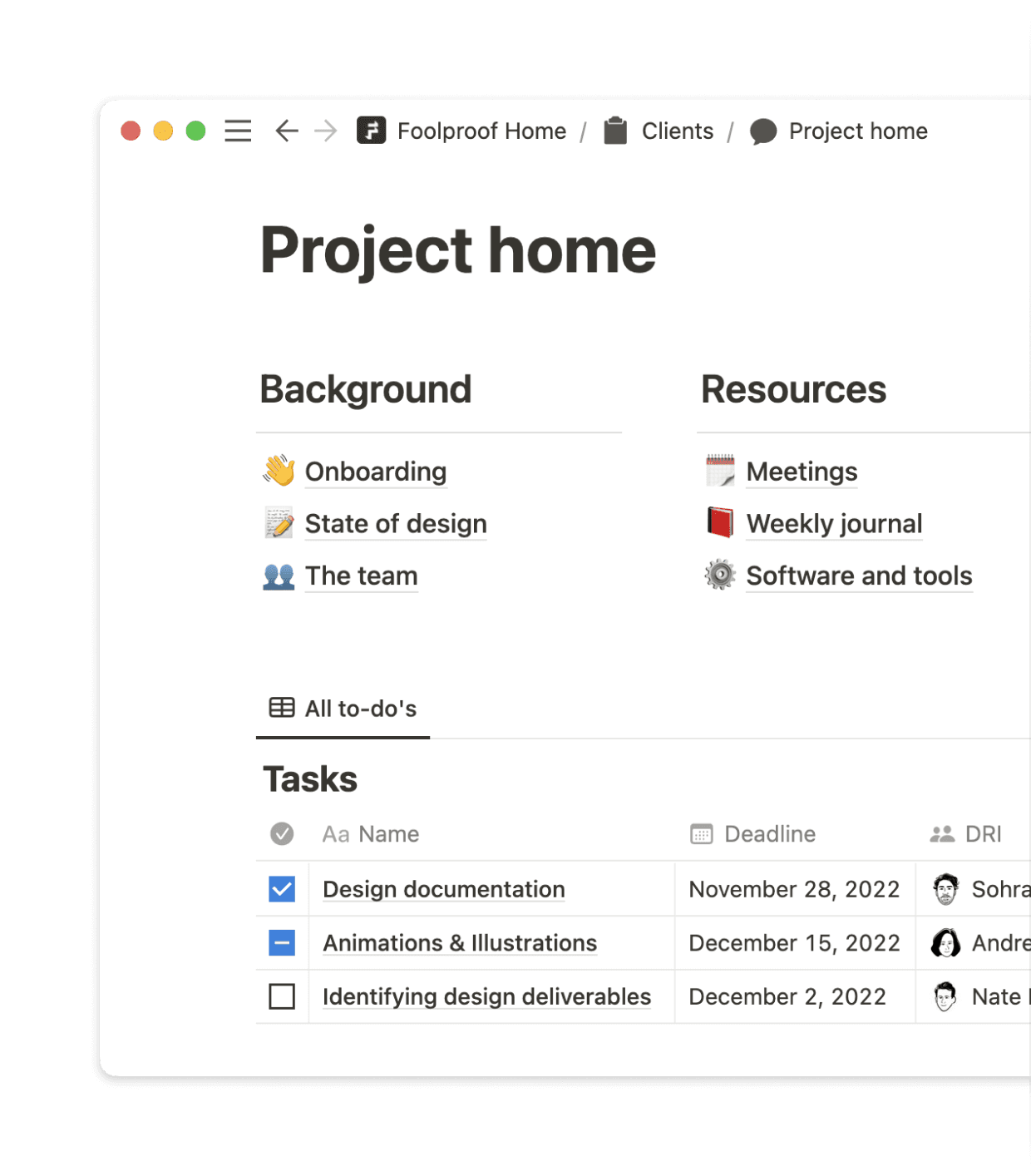
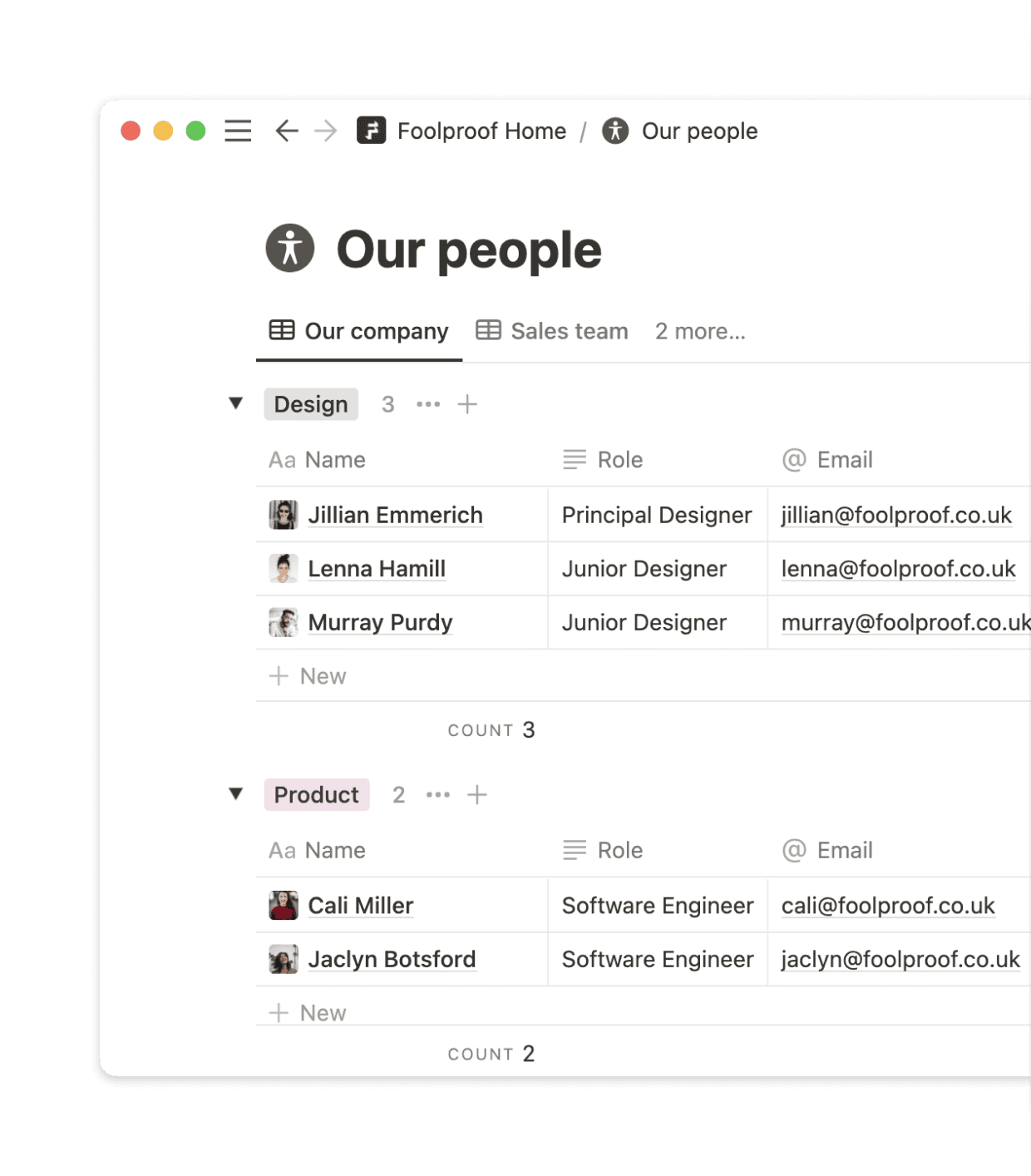
After building out a company-wide wiki, Philip turned his attention to individual teams. Using an onboarding process (templated in Notion, of course), he migrated each department into Foolproof’s workspace, helped team leads build their team homepage — and then handed it over to them.
Teams customized their pages to fit their needs and roles in the company. For example, the Leadership Team uses theirs to share information across the company, and the Marketing team stores brand guidelines for internal team members.
People took ownership of their pages and customized them to match their teams.
Replace undocumented knowledge with long-term organizational memory
Foolproof’s knowledge management transformation started with wikis but grew quickly from there. Employees began using Notion pages as project headquarters, collecting context, planning work, and collaborating with other team members. They even designed several templates, allowing colleagues to set up their own project homepage with a single click.
Before, teams relied on face-to-face briefings to bring new members up to speed. Now Notion acts as Foolproof’s long-term memory system; when a new employee joins a project, they can explore the context and get up to speed at their own pace.
The company’s shift into Notion has also added a lot of transparency. If someone is curious about another team or project, they can explore the homepage and learn more about the work. This has helped people better understand their colleagues and collaborate cross-functionally.
Foolproof’s knowledge management transformation began with tearing down information siloes, but over the long term, it’s been much more about building bridges. They’ve used Notion to bring teams together, share information, and work more collaboratively.